The Stellar Symphony: Orchestrating the Music of the Cosmos
Astronomy & Astrophysics
Loading image...
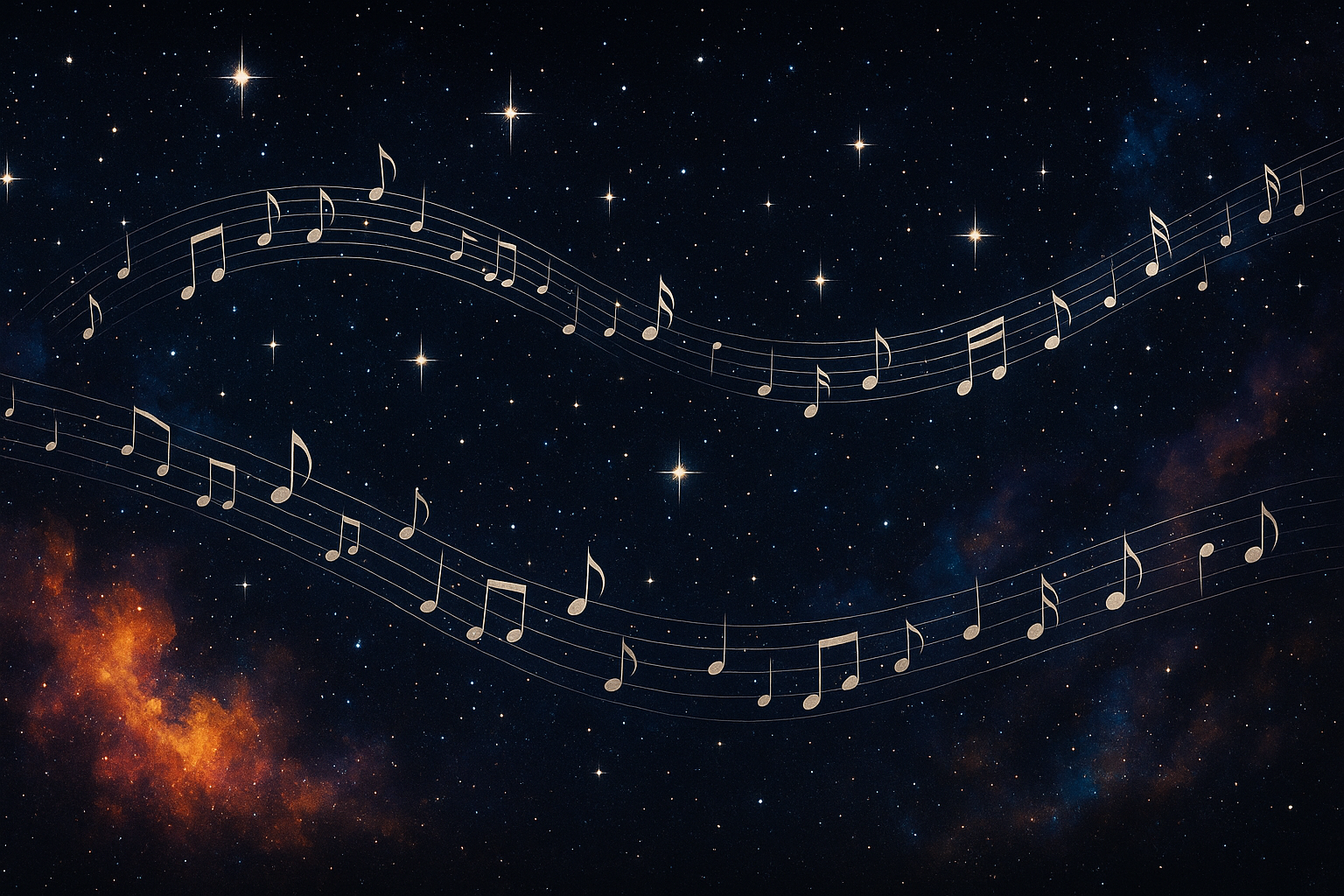
As August sweeps in with its warm nights, the universe is not just a void of darkness, but a grand concert hall echoing with the harmonious sounds of celestial bodies. Imagine if the stars were musicians, each playing their unique instruments, collaborating to create a symphony that resonates across the cosmos. In this blog post, we'll explore the intriguing concept of cosmic sounds and how they relate to what we observe in the night sky.
Every star is like a note on a vast musical scale, vibrating with energy and emitting light that we can capture with our telescopes. But did you know that stars can also produce sound waves? Though sound cannot travel through the vacuum of space, it can resonate in the atmospheres of stars. For instance, the pulsations of a star like Betelgeuse create waves that can be measured and interpreted as sound frequencies here on Earth. These frequencies tell us about the star’s size, temperature, and even its age, much like a musical score reveals the nuances of a composition.
Let’s not forget black holes, the cosmic DJs of the galaxy. Their gravitational pull is so intense that they can ‘warp’ the sound waves around them, creating effects that could put any record-scratching technique to shame. Some astrophysicists like to think of black holes as the ultimate remixers—taking stellar remnants and spinning them into something entirely new and mysterious. When matter is pulled in, it heats up and releases X-rays that could make your head spin, presenting a soundscape that is far from soothing but incredibly fascinating.
And how about the alignment of planets as they stroll through their celestial orbits? When they lineup just right, they create musical harmonics that ancient astronomers called the 'Music of the Spheres'. Imagine if every time you gazed up and saw a planetary conjunction, you were witnessing a concert of harmony that has echoed through time, a melody that even the ancients pondered while writing star lore.
In this month of August 2026, gather with friends or family and take a moment to look up. Constellations dance overhead like a well-choreographed ballet, and who knows? You might just hear the faint but beautiful whispers of the stars' symphony. It’s nature's music, inviting us to listen and learn from the vast oracle of the cosmos. So let’s tune in—your front-row seat to this concert is just a glance upward!
Every star is like a note on a vast musical scale, vibrating with energy and emitting light that we can capture with our telescopes. But did you know that stars can also produce sound waves? Though sound cannot travel through the vacuum of space, it can resonate in the atmospheres of stars. For instance, the pulsations of a star like Betelgeuse create waves that can be measured and interpreted as sound frequencies here on Earth. These frequencies tell us about the star’s size, temperature, and even its age, much like a musical score reveals the nuances of a composition.
Let’s not forget black holes, the cosmic DJs of the galaxy. Their gravitational pull is so intense that they can ‘warp’ the sound waves around them, creating effects that could put any record-scratching technique to shame. Some astrophysicists like to think of black holes as the ultimate remixers—taking stellar remnants and spinning them into something entirely new and mysterious. When matter is pulled in, it heats up and releases X-rays that could make your head spin, presenting a soundscape that is far from soothing but incredibly fascinating.
And how about the alignment of planets as they stroll through their celestial orbits? When they lineup just right, they create musical harmonics that ancient astronomers called the 'Music of the Spheres'. Imagine if every time you gazed up and saw a planetary conjunction, you were witnessing a concert of harmony that has echoed through time, a melody that even the ancients pondered while writing star lore.
In this month of August 2026, gather with friends or family and take a moment to look up. Constellations dance overhead like a well-choreographed ballet, and who knows? You might just hear the faint but beautiful whispers of the stars' symphony. It’s nature's music, inviting us to listen and learn from the vast oracle of the cosmos. So let’s tune in—your front-row seat to this concert is just a glance upward!