The Cosmic Time Capsule: What Will Our Future Generations Discover?
Cosmology & Universe
Space Exploration
Loading image...
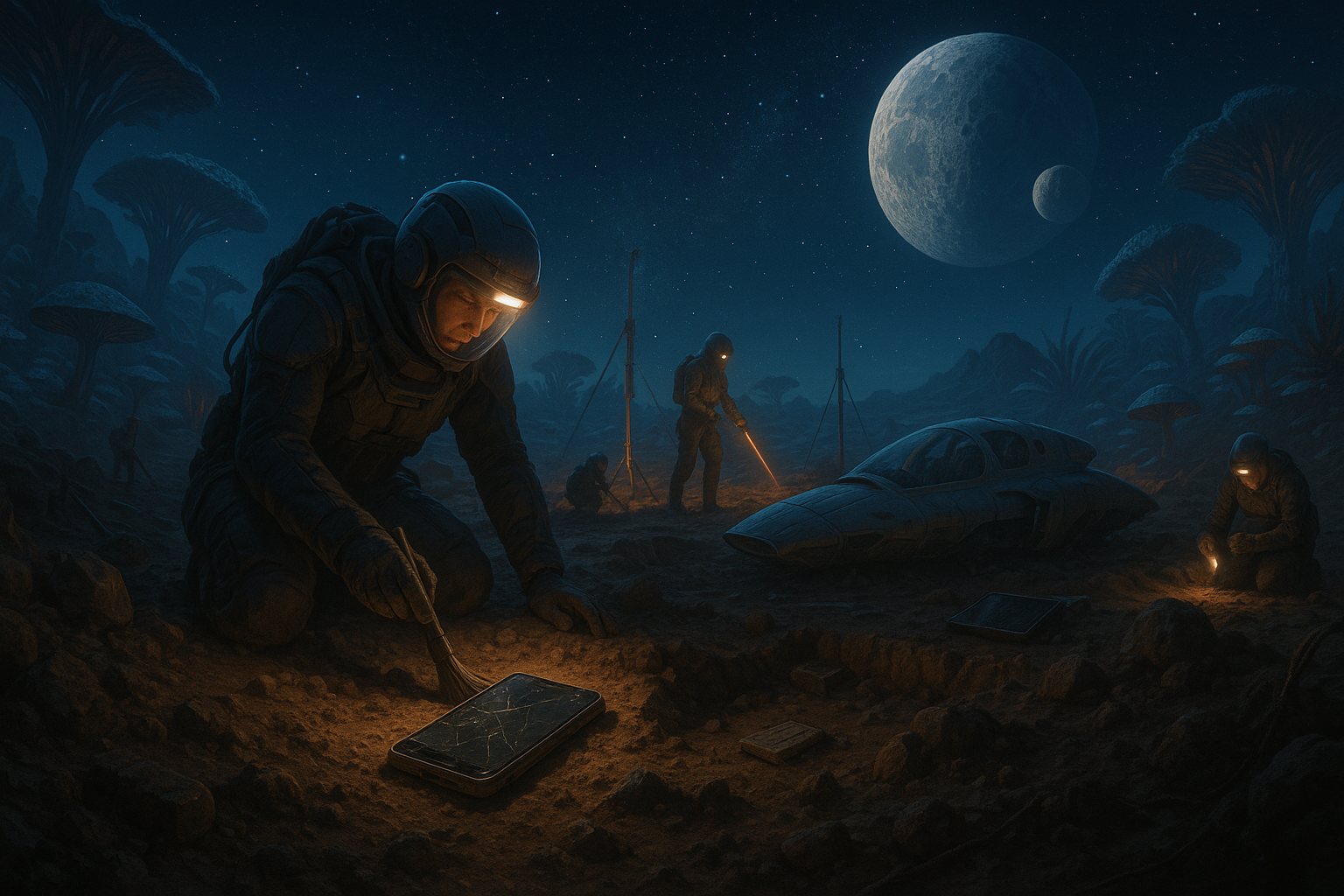
As we navigate the cosmos in 2026, let's ponder a playful scenario: what if our current technologies, artifacts, and even our very cultures were to act as cosmic time capsules, waiting for future civilizations to uncover? Imagine a group of advanced aliens landing on Earth, unearthing remnants of our era buried under layers of stardust and geological shifts. Would they laugh at our fascination with cat videos or marvel at our attempts to communicate via emojis? In this blog, we’re delving into the concept of time capsules, not just here on Earth, but throughout the universe.
Consider the Voyager Golden Records, designed to be interstellar messages in a bottle for anyone who might stumble upon them. With music from Bach to Chuck Berry and greetings in multiple languages, these records showcase our creativity and diversity. But what if an extraterrestrial intelligence found one fifty thousand years from now? They might scratch their heads, trying to decode our peculiar human emotions through the lens of their own vastly different experiences.
Furthermore, think about space probes like New Horizons, which ventured into the depths of the Kuiper Belt. These probes carry our stories and scientific achievements, all wrapped up in a shiny metallic package, much like a cosmic message in a jar. What kinds of legacies are we leaving behind in this grand cosmic library? Will future explorers read our headlines and laugh, or will they gaze in awe at the curiosity that drove us to reach for the stars?
Then there's the immense question of what happens to our digital footprint. With data stored on servers and satellites, will future beings stumble upon our memes and tweets as ancient artifacts? Will they decode the complexities of our social interactions, or will they just find our hashtags utterly perplexing? Imagine an intelligent species in the year 2999 hitting the archives and trying to understand why we spent so much time posting about breakfast!
As we contemplate these cosmic time capsules in April 2026, it’s clear that our creations—be they artistic, scientific, or downright weird—define who we are as a species. Each satellite and probe we send out into the void serves as a testament to our existence, curiosity, and perhaps even our humor. So next time you gaze up at the stars, think about the legacies we're building and what amusing tapestries they might weave for future generations. And who knows, they might even find this blog post on some distant planet as the original source of cosmic chuckles!
Consider the Voyager Golden Records, designed to be interstellar messages in a bottle for anyone who might stumble upon them. With music from Bach to Chuck Berry and greetings in multiple languages, these records showcase our creativity and diversity. But what if an extraterrestrial intelligence found one fifty thousand years from now? They might scratch their heads, trying to decode our peculiar human emotions through the lens of their own vastly different experiences.
Furthermore, think about space probes like New Horizons, which ventured into the depths of the Kuiper Belt. These probes carry our stories and scientific achievements, all wrapped up in a shiny metallic package, much like a cosmic message in a jar. What kinds of legacies are we leaving behind in this grand cosmic library? Will future explorers read our headlines and laugh, or will they gaze in awe at the curiosity that drove us to reach for the stars?
Then there's the immense question of what happens to our digital footprint. With data stored on servers and satellites, will future beings stumble upon our memes and tweets as ancient artifacts? Will they decode the complexities of our social interactions, or will they just find our hashtags utterly perplexing? Imagine an intelligent species in the year 2999 hitting the archives and trying to understand why we spent so much time posting about breakfast!
As we contemplate these cosmic time capsules in April 2026, it’s clear that our creations—be they artistic, scientific, or downright weird—define who we are as a species. Each satellite and probe we send out into the void serves as a testament to our existence, curiosity, and perhaps even our humor. So next time you gaze up at the stars, think about the legacies we're building and what amusing tapestries they might weave for future generations. And who knows, they might even find this blog post on some distant planet as the original source of cosmic chuckles!