The Cosmic Symphony: How Stars Create Their Own Music
Astrophotography & Observational
Cosmology & Universe
Loading image...
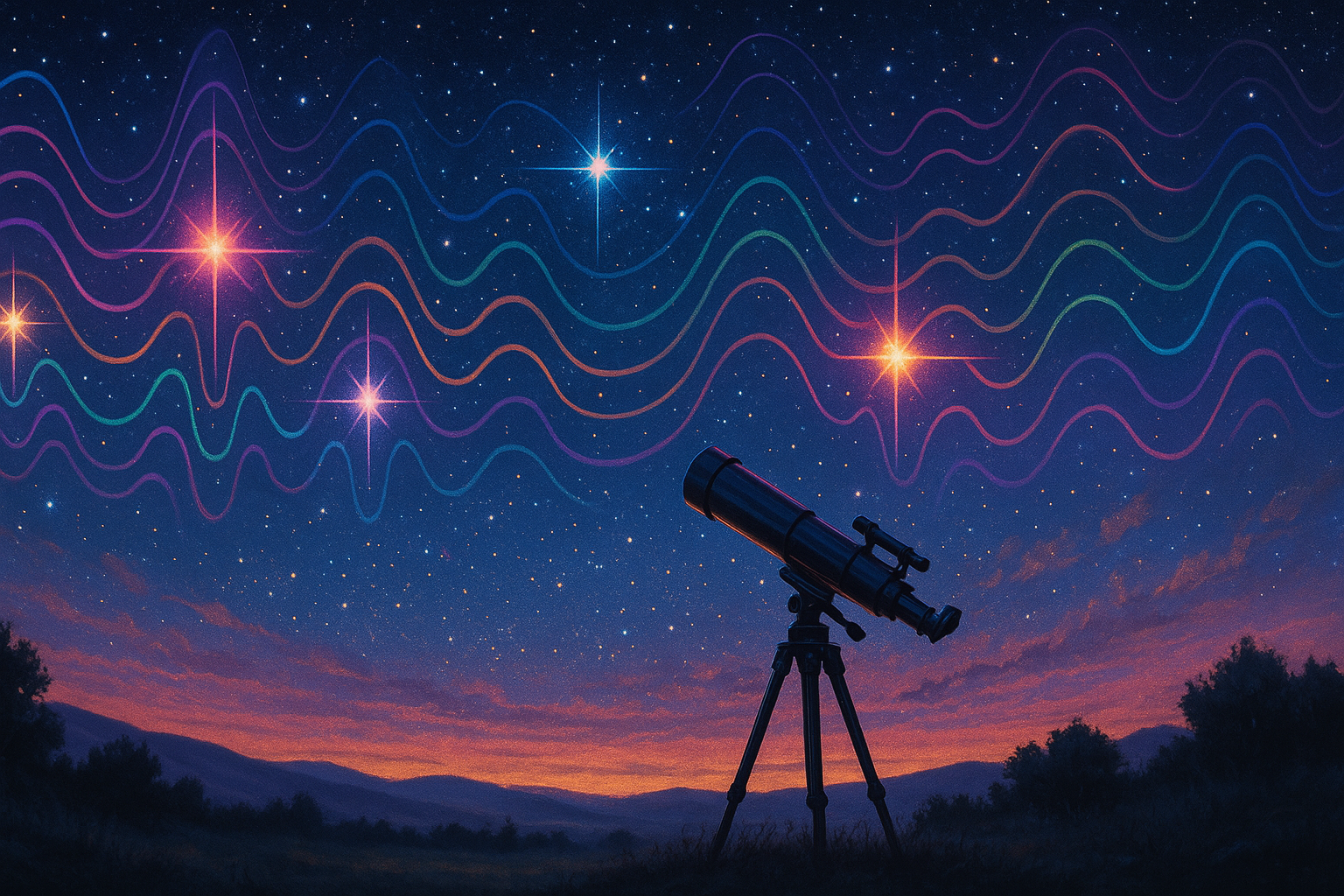
In the grand cosmic theater of 2026, where every twinkling star plays its part, one might wonder if there's an orchestra hidden among the galaxies, crafting melodies that reach our ears in the softest whispers of the universe. How do these stellar bodies, burning bright and fiercely, manage to resonate with such beauty? Believe it or not, stars actually sing! And no, they’re not belting out pop tunes; rather, they create frequencies that can be detected through the wonders of astrophysics.
To put it simply, stars can oscillate and pulse, generating seismic waves that ripple across their surfaces and resonate like a giant musical instrument. Imagine strumming a guitar and feeling the vibrations resonate through the strings; stars do the same but on a cosmic scale. Each star has its unique ‘voice,’ shaped by its size, age, and elemental composition. In fact, astronomers have likened these frequencies to the musical notes of our universe, each note a glimpse into the star’s past, present, and future.
During the sizzling summer month of June, as we hold our telescopes and gaze into the night sky, we can almost hear these cosmic harmonies. It’s akin to tuning into a celestial radio station broadcasting from millions of light-years away. Every star is a frequency, a note in this cosmic symphony, revealing secrets of its internal structure, lifecycle, and even its ultimate demise. For example, the majestic Betelgeuse, a red supergiant, produces deep bass tones, while the shimmering Sirius emits a higher pitch – as if speaking in contrasting musical genres!
Astrophysicists utilize a technique called asteroseismology, where they analyze these stellar vibrations to unlock the mysteries of how a star lives and dies. For us earthlings, it’s not just about the physics; it’s about connecting with the universe in a way that transcends spoken language. The universe is spinning its tales and singing its songs, and all we have to do is simply listen. So, next time you find yourself under the vast expanse of sky, let the music of the stars wash over you – who knows, you might just learn their secret melodies! Whether you’re a lifelong sky-watcher or a curious beginner, the symphony of the cosmos offers a performance you won’t want to miss!
To put it simply, stars can oscillate and pulse, generating seismic waves that ripple across their surfaces and resonate like a giant musical instrument. Imagine strumming a guitar and feeling the vibrations resonate through the strings; stars do the same but on a cosmic scale. Each star has its unique ‘voice,’ shaped by its size, age, and elemental composition. In fact, astronomers have likened these frequencies to the musical notes of our universe, each note a glimpse into the star’s past, present, and future.
During the sizzling summer month of June, as we hold our telescopes and gaze into the night sky, we can almost hear these cosmic harmonies. It’s akin to tuning into a celestial radio station broadcasting from millions of light-years away. Every star is a frequency, a note in this cosmic symphony, revealing secrets of its internal structure, lifecycle, and even its ultimate demise. For example, the majestic Betelgeuse, a red supergiant, produces deep bass tones, while the shimmering Sirius emits a higher pitch – as if speaking in contrasting musical genres!
Astrophysicists utilize a technique called asteroseismology, where they analyze these stellar vibrations to unlock the mysteries of how a star lives and dies. For us earthlings, it’s not just about the physics; it’s about connecting with the universe in a way that transcends spoken language. The universe is spinning its tales and singing its songs, and all we have to do is simply listen. So, next time you find yourself under the vast expanse of sky, let the music of the stars wash over you – who knows, you might just learn their secret melodies! Whether you’re a lifelong sky-watcher or a curious beginner, the symphony of the cosmos offers a performance you won’t want to miss!