The Cosmic Garden: How Planets Grow Their Own Rings
Astronomy & Astrophysics
Space Exploration
Loading image...
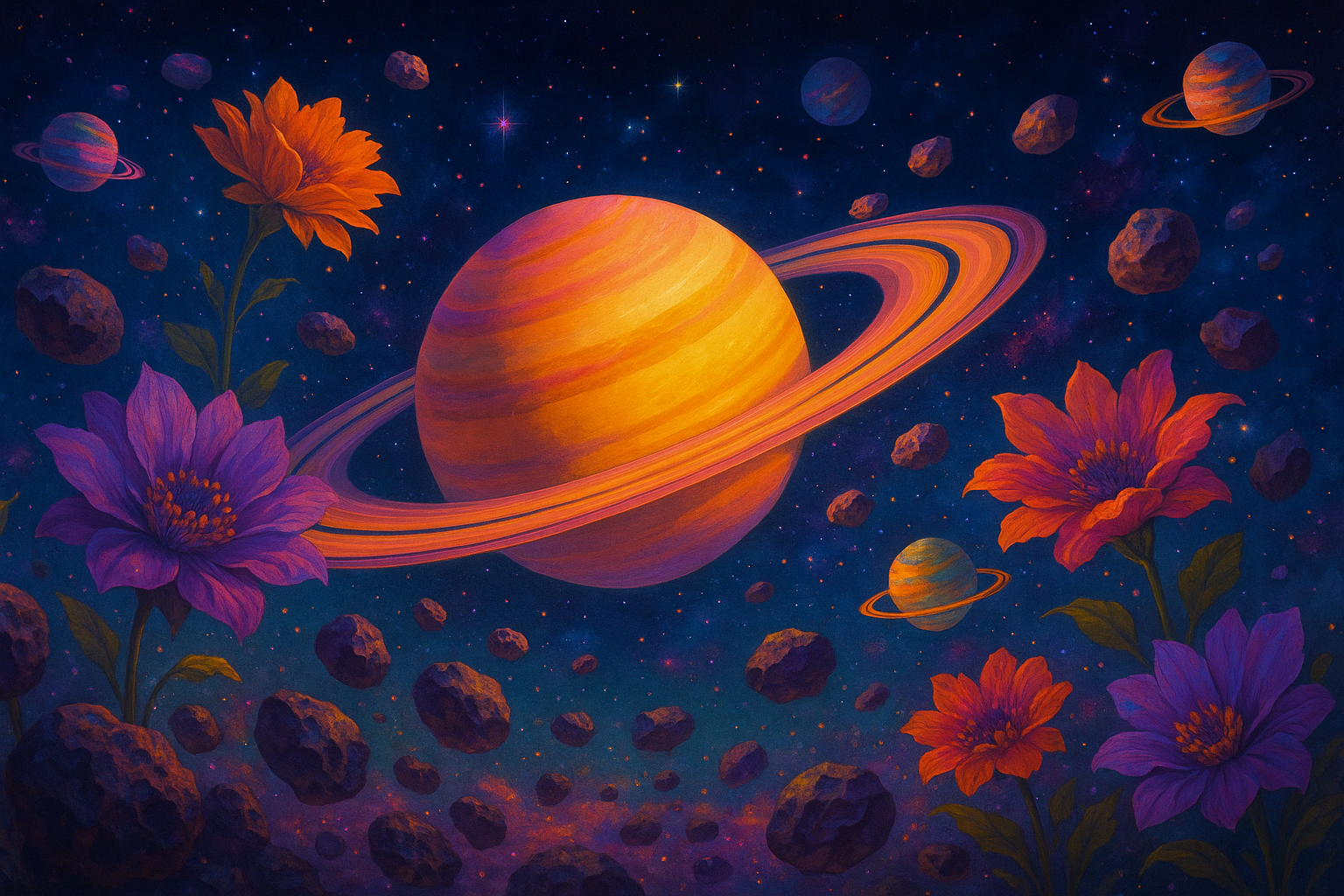
As we find ourselves amidst July 2026, let’s take a stroll through the cosmic garden where our favorite planets aren't just spinning in space—they're farming their own rings! Picture Saturn, not just as the ringed beauty of our solar system but as a skilled gardener tending to its delicate, icy leftovers from a cosmic buffet.
Imagine if planets could cultivate their own gardens, using rings made from asteroids and remnants of distant moons as their fertile soil. Each ring could be like a salad bowl, incorporating tasty tidbits of ice and rock, tossed together by the gentle gravitational pull of the planet it orbits. And just like how gardeners prune their plants, planets can 'grow' their rings through collisions and gravitational interactions, creating new layers that are always shifting and evolving over cosmic time.
Let’s not forget that asteroid belts are also critical to this garden analogy. They’re the wildflowers of our solar system—chaotic, surprising, and sometimes crashing into the well-ordered realms of planetary rings. But in the grand tapestry of our universe, these wildflowers also help fertilize the surroundings, contributing material that may eventually become part of a planet’s rings.
The next time you gaze up at the night sky, remember that those stunning rings surrounding Jupiter and Saturn aren’t just pretty decorations; they’re evidence of interstellar gardening where gravity, time, and chance create a cosmic kaleidoscope. So, as we enjoy the beautiful night sky this July, let’s celebrate the enchanting idea of planets as green-thumbed gardeners, decorating their orbits with elegant rings that narrate tales of cosmic nursery and nature.
In the end, from tiny pebbles to majestic icy giants, the universe is one big garden, and we’re lucky to have front-row seats! So, what do you say, stargazers? Are you ready to become cosmic ring connoisseurs?
Imagine if planets could cultivate their own gardens, using rings made from asteroids and remnants of distant moons as their fertile soil. Each ring could be like a salad bowl, incorporating tasty tidbits of ice and rock, tossed together by the gentle gravitational pull of the planet it orbits. And just like how gardeners prune their plants, planets can 'grow' their rings through collisions and gravitational interactions, creating new layers that are always shifting and evolving over cosmic time.
Let’s not forget that asteroid belts are also critical to this garden analogy. They’re the wildflowers of our solar system—chaotic, surprising, and sometimes crashing into the well-ordered realms of planetary rings. But in the grand tapestry of our universe, these wildflowers also help fertilize the surroundings, contributing material that may eventually become part of a planet’s rings.
The next time you gaze up at the night sky, remember that those stunning rings surrounding Jupiter and Saturn aren’t just pretty decorations; they’re evidence of interstellar gardening where gravity, time, and chance create a cosmic kaleidoscope. So, as we enjoy the beautiful night sky this July, let’s celebrate the enchanting idea of planets as green-thumbed gardeners, decorating their orbits with elegant rings that narrate tales of cosmic nursery and nature.
In the end, from tiny pebbles to majestic icy giants, the universe is one big garden, and we’re lucky to have front-row seats! So, what do you say, stargazers? Are you ready to become cosmic ring connoisseurs?