The Cosmic Chronicles: Unraveling the Secrets of Dark Matter
Astronomy & Astrophysics
Loading image...
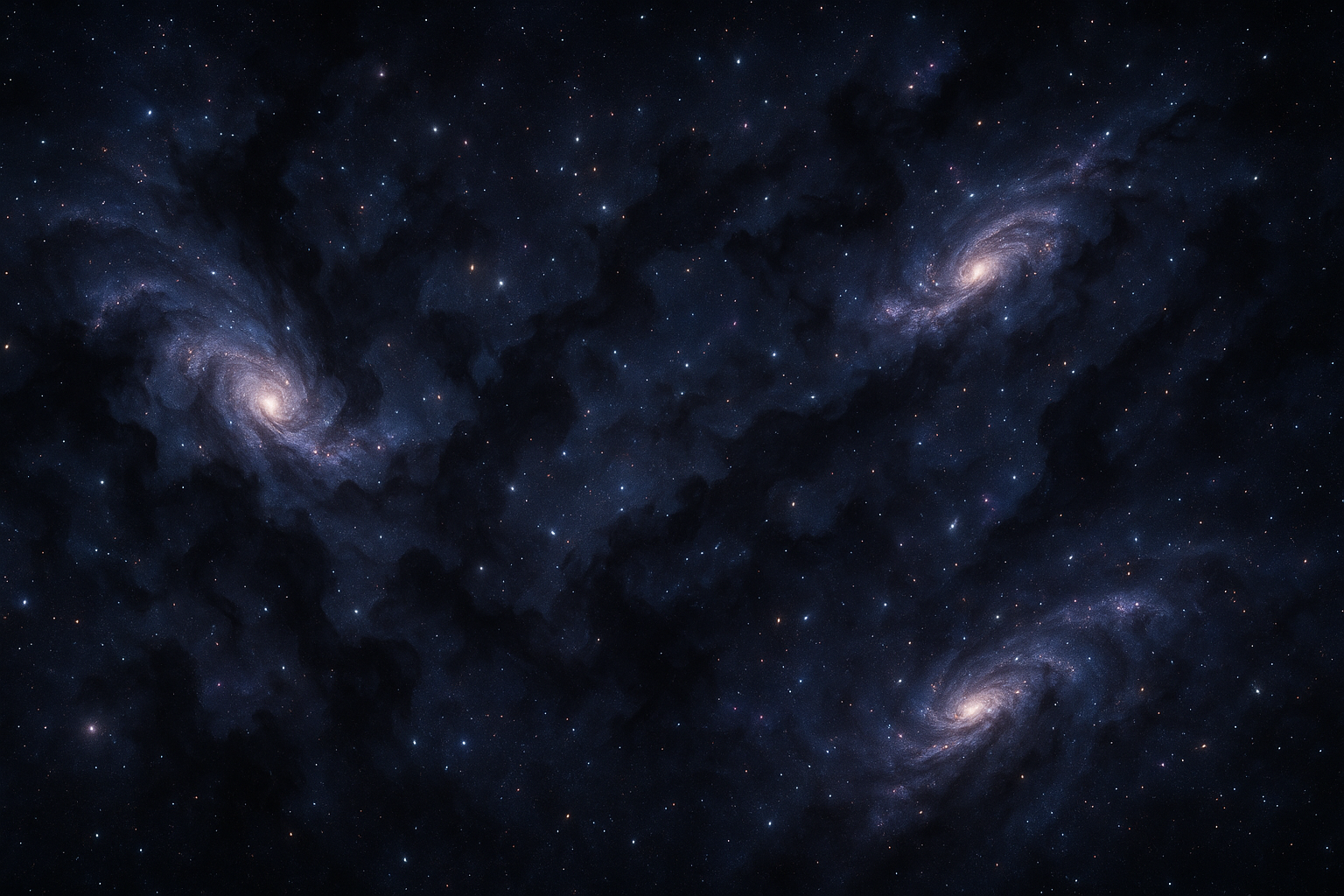
Welcome to our latest cosmic tale, where we dive deep into the enigmatic world of dark matter, the universe's invisible sidekick that's been playing hide and seek with astronomers for decades! Imagine it as the ultimate cosmic ninja—stealthy, elusive, but oh so crucial for keeping our universe in check. It’s like trying to bake a cake without knowing how much flour you’ve added; without dark matter, we'd struggle to make sense of the galaxies swirling around us.
In February 2026, the whispers of dark matter's existence continue to echo through the halls of astrophysics, creating a buzz akin to a crucial subplot in a riveting space opera. Scientists estimate that dark matter constitutes about 85% of the total mass of the universe, yet it remains almost entirely undetected. How can something so significant be so invisible?
Let’s take a step back. Picture a bustling party—everyone is dancing, laughing, and enjoying themselves. Only a few guests are visible, but wait! You can feel the vibrant energy and life pulsing through the air. That’s dark matter. It’s the unseen force that holds galaxies together, keeping them from flying apart like confetti in the wind. Astonishingly, while we can observe the behavior of galaxies, the actual substance of dark matter remains concealed, challenging scientists to unravel the threads of its existence.
Recent advancements in technology and experimentation are akin to shining a flashlight into some of the darkest corners of this cosmic labyrinth. For instance, projects like the Large Hadron Collider are attempting to produce dark matter particles, shedding light on the universe's most elusive ingredients. The Atlas and CMS experiments are both on the lookout for signs of supersymmetry, a theory that could link the ordinary matter we know with the tantalizing prospect of dark matter. It’s science fiction brought to life—a real-time quest for knowledge!
As we celebrate the marvels of our cosmos this month, let’s remember that dark matter keeps our celestial pizza together, ensuring nothing drifts away into the cosmic abyss. Despite its elusive nature, the quest to understand dark matter continues to inspire generations of astronomers, like modern-day treasure hunters on the most exciting cosmic scavenger hunt imaginable. So grab your metaphorical magnifying glass; the universe is waiting to be explored!
In February 2026, the whispers of dark matter's existence continue to echo through the halls of astrophysics, creating a buzz akin to a crucial subplot in a riveting space opera. Scientists estimate that dark matter constitutes about 85% of the total mass of the universe, yet it remains almost entirely undetected. How can something so significant be so invisible?
Let’s take a step back. Picture a bustling party—everyone is dancing, laughing, and enjoying themselves. Only a few guests are visible, but wait! You can feel the vibrant energy and life pulsing through the air. That’s dark matter. It’s the unseen force that holds galaxies together, keeping them from flying apart like confetti in the wind. Astonishingly, while we can observe the behavior of galaxies, the actual substance of dark matter remains concealed, challenging scientists to unravel the threads of its existence.
Recent advancements in technology and experimentation are akin to shining a flashlight into some of the darkest corners of this cosmic labyrinth. For instance, projects like the Large Hadron Collider are attempting to produce dark matter particles, shedding light on the universe's most elusive ingredients. The Atlas and CMS experiments are both on the lookout for signs of supersymmetry, a theory that could link the ordinary matter we know with the tantalizing prospect of dark matter. It’s science fiction brought to life—a real-time quest for knowledge!
As we celebrate the marvels of our cosmos this month, let’s remember that dark matter keeps our celestial pizza together, ensuring nothing drifts away into the cosmic abyss. Despite its elusive nature, the quest to understand dark matter continues to inspire generations of astronomers, like modern-day treasure hunters on the most exciting cosmic scavenger hunt imaginable. So grab your metaphorical magnifying glass; the universe is waiting to be explored!