Supernovae: Nature's Fireworks in the Cosmos
Astronomy & Astrophysics
Astrophotography & Observational
Loading image...
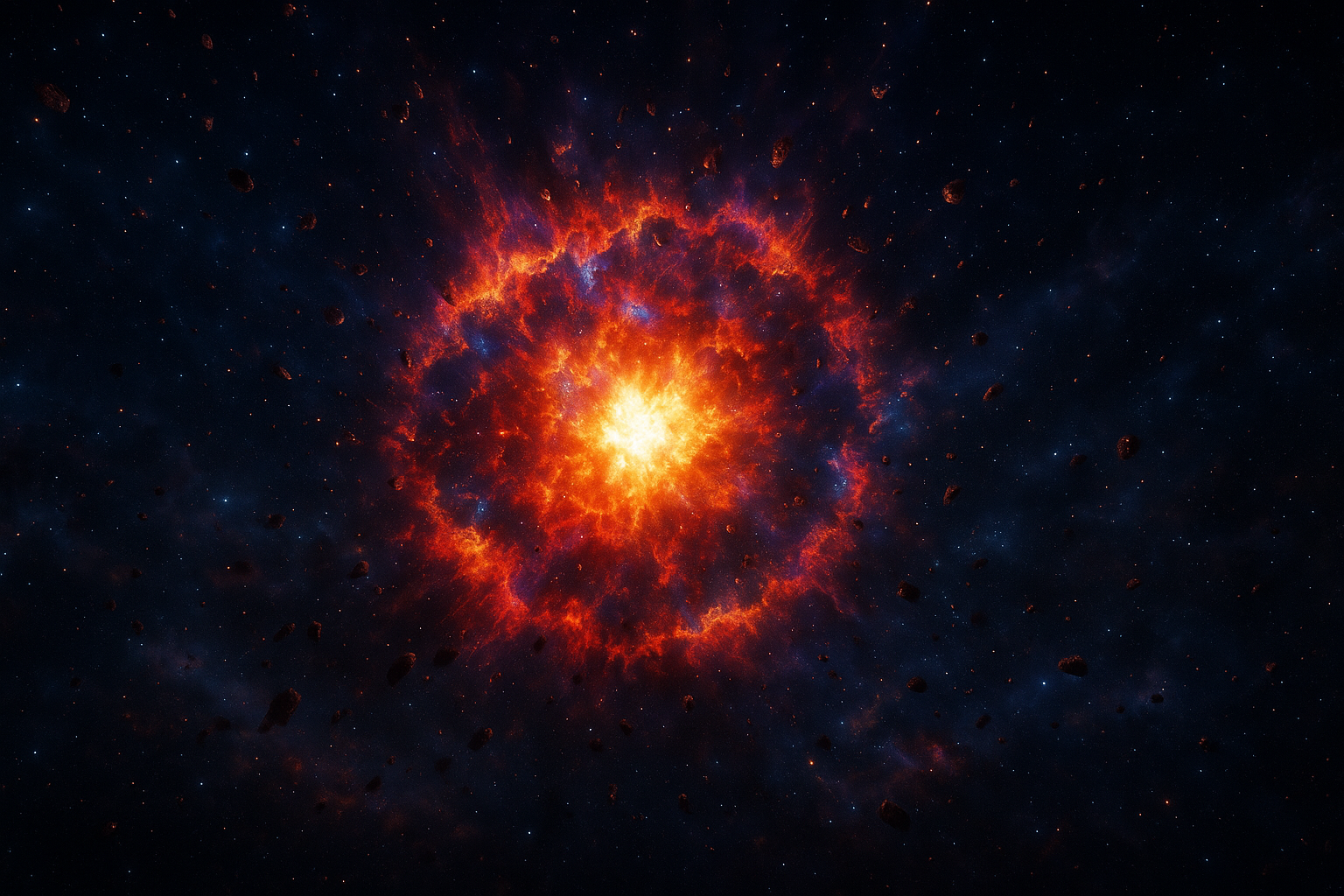
As January 2026 unfolds, the chill of winter might tempt you to cozy up indoors, but fear not! The universe is throwing a galactic celebration, and you’re invited to witness the spectacular show of supernovae—nature's very own fireworks! Imagine a cosmic party where a massive star undergoes a dramatic transformation, exploding with the brilliance of billions of suns. That’s right, supernovae are not just any ordinary stellar events; they are the grand finales in a star's life cycle, akin to the climax of a beloved movie that leaves the audience gasping for air.
Picture it: a star, perhaps eight times the mass of our Sun, hanging out for millions of years, steadily fusing hydrogen into helium in its core. As the core runs out of fuel, things get a little dicey. The core collapses under its own gravitational pull, leading to a series of spectacular nuclear reactions. Then, *boom!* A supernova ejects the outer layers into space, lighting up the sky and leaving behind a stunning remnant, such as a neutron star or even a black hole—talk about a dramatic plot twist!
While we can't always see these events happen in real-time (they often happen millions of light-years away), scientists have deduced that our galaxy, the Milky Way, could witness a supernova within the next few million years. Talk about a long wait! But for now, astronomers keep a pokey lookout at nearby galaxies, where northern winter nights make stargazing a bit enchanting.
Many people question, "Why should I care about supernovae?" Well, hold on to your telescopes! These youthful explosions are cosmic factories, forging heavier elements such as gold, silver, and uranium—yes, the very same elements that make up your favorite bling! Without supernovae, we wouldn’t have the diverse elements that make up our planet and life as we know it. Kind of makes you think twice about those staggering trip to the jeweler!
So, savvy stargazers, as you step outside in the frosty air, keep your eyes peeled for the remnants of past cosmic fireworks, like the Crab Nebula or the stellar remains of Supernova 1987A. They’re like the confetti left over from a party that lasted eons. Who would have thought the universe had such a flair for drama? Whether you’re a fan of celestial events or just curious about the cosmos, let supernovae remind you that the universe never really stops dazzling us, even on the coldest of winter nights!
Picture it: a star, perhaps eight times the mass of our Sun, hanging out for millions of years, steadily fusing hydrogen into helium in its core. As the core runs out of fuel, things get a little dicey. The core collapses under its own gravitational pull, leading to a series of spectacular nuclear reactions. Then, *boom!* A supernova ejects the outer layers into space, lighting up the sky and leaving behind a stunning remnant, such as a neutron star or even a black hole—talk about a dramatic plot twist!
While we can't always see these events happen in real-time (they often happen millions of light-years away), scientists have deduced that our galaxy, the Milky Way, could witness a supernova within the next few million years. Talk about a long wait! But for now, astronomers keep a pokey lookout at nearby galaxies, where northern winter nights make stargazing a bit enchanting.
Many people question, "Why should I care about supernovae?" Well, hold on to your telescopes! These youthful explosions are cosmic factories, forging heavier elements such as gold, silver, and uranium—yes, the very same elements that make up your favorite bling! Without supernovae, we wouldn’t have the diverse elements that make up our planet and life as we know it. Kind of makes you think twice about those staggering trip to the jeweler!
So, savvy stargazers, as you step outside in the frosty air, keep your eyes peeled for the remnants of past cosmic fireworks, like the Crab Nebula or the stellar remains of Supernova 1987A. They’re like the confetti left over from a party that lasted eons. Who would have thought the universe had such a flair for drama? Whether you’re a fan of celestial events or just curious about the cosmos, let supernovae remind you that the universe never really stops dazzling us, even on the coldest of winter nights!