Starships and Stardust: The Quirky History of Human Interstellar Aspirations
Space Exploration
Astrology & Mythology
Loading image...
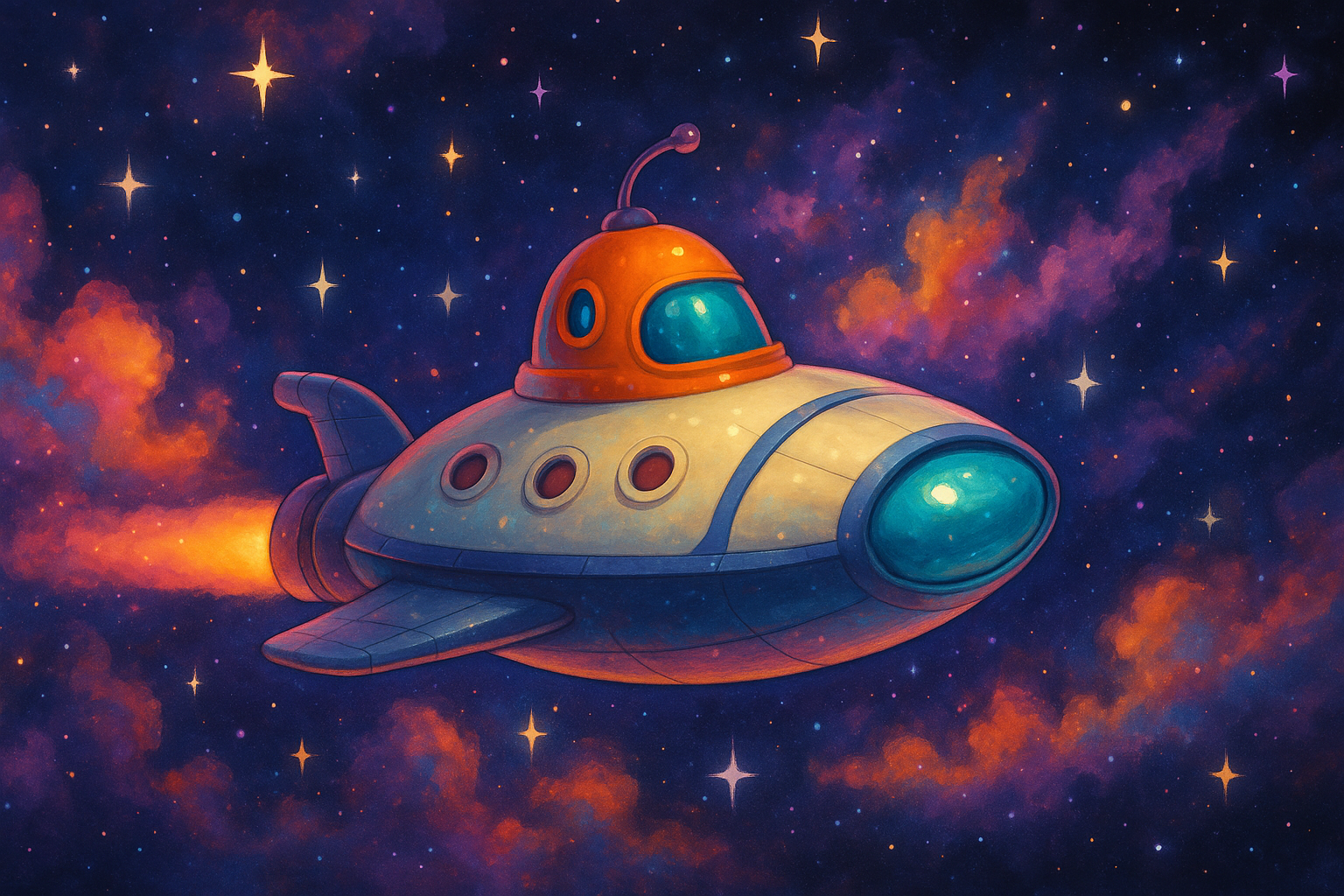
As April showers bring May flowers, we find ourselves in the vast garden of the cosmos, pondering the future of human exploration beyond our blue planet. Starships and stardust—sounds romantic, doesn’t it? Well, put on your cosmic seatbelt, because we are about to embark on a playful journey tracing our fascination with interstellar travel, twinkling just like the stars themselves.
From the dreams sketched in the notebooks of early science fiction writers to the ambitious blueprints drawn up by NASA and SpaceX, the quest for interstellar travel has a history as colorful as a nebula. Imagine a time when entrepreneurs like Elon Musk envisioned starships gliding through the cosmos, a feat that might seem like a whimsical childhood fantasy. Yet, here in 2026, we stand on the precipice of possibility, with technologies rapidly evolving and space travel becoming a tantalizing prospect.
One of the most hilarious legs of this journey has been the wild array of concepts proposed for getting to the stars. From Bussard ramjets that scoop up interstellar hydrogen to the light sails gently caressed by solar winds, the creative minds of scientists have spared no effort. When you think about it, some of these ideas sound like a sci-fi movie on a budget with overly ambitious special effects! Just picture a gigantic sailboat flinging itself across the galaxy—talk about a cosmic camping trip!
But let’s bring it down to Earth—how far are we really from achieving this dream? Current propulsion systems can barely get us to Mars in a few months, let alone to the nearest star system, Proxima Centauri, over four light-years away! With a spacecraft zooming at a brisk 10% of the speed of light, we are looking at a travel time of about 40 years. That's a long road trip, especially when you consider who's going to handle the snacks!
In April of 2026, as we revel in the beauty of a new season, we might find ourselves daydreaming about distant worlds, far-off stars, and maybe even a stop at an alien diner—where the house specialty is definitely not pizza, but stardust smoothies! The leap from stargazing to space-traveling isn’t just a leap of faith; it’s a journey paved with scientific curiosity, imagination, and a touch of humor as we explore the universe's bizarre and whimsical possibilities. So, buckle up! Our cosmic adventure has only just begun!
From the dreams sketched in the notebooks of early science fiction writers to the ambitious blueprints drawn up by NASA and SpaceX, the quest for interstellar travel has a history as colorful as a nebula. Imagine a time when entrepreneurs like Elon Musk envisioned starships gliding through the cosmos, a feat that might seem like a whimsical childhood fantasy. Yet, here in 2026, we stand on the precipice of possibility, with technologies rapidly evolving and space travel becoming a tantalizing prospect.
One of the most hilarious legs of this journey has been the wild array of concepts proposed for getting to the stars. From Bussard ramjets that scoop up interstellar hydrogen to the light sails gently caressed by solar winds, the creative minds of scientists have spared no effort. When you think about it, some of these ideas sound like a sci-fi movie on a budget with overly ambitious special effects! Just picture a gigantic sailboat flinging itself across the galaxy—talk about a cosmic camping trip!
But let’s bring it down to Earth—how far are we really from achieving this dream? Current propulsion systems can barely get us to Mars in a few months, let alone to the nearest star system, Proxima Centauri, over four light-years away! With a spacecraft zooming at a brisk 10% of the speed of light, we are looking at a travel time of about 40 years. That's a long road trip, especially when you consider who's going to handle the snacks!
In April of 2026, as we revel in the beauty of a new season, we might find ourselves daydreaming about distant worlds, far-off stars, and maybe even a stop at an alien diner—where the house specialty is definitely not pizza, but stardust smoothies! The leap from stargazing to space-traveling isn’t just a leap of faith; it’s a journey paved with scientific curiosity, imagination, and a touch of humor as we explore the universe's bizarre and whimsical possibilities. So, buckle up! Our cosmic adventure has only just begun!