Navigating the Cosmic Seas: Constellations as Ancient Maps
Astrology & Mythology
Astrophotography & Observational
Loading image...
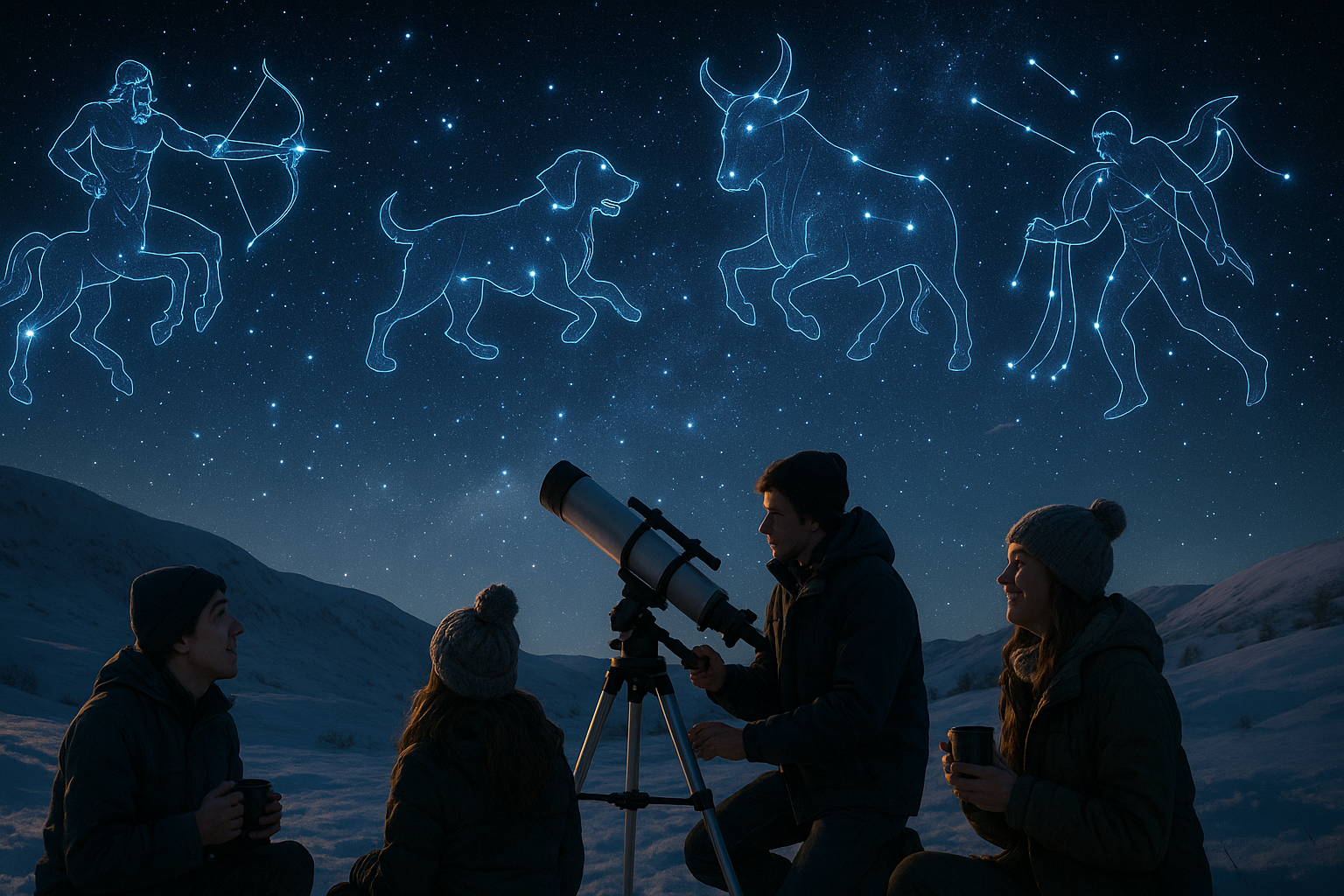
As February drapes the night sky in its frosty embrace, the stars wink back, inviting us to ponder their age-old messages. Much like sailors of yore who relied on the constellations to guide their ships through unknown waters, today’s stargazers can use these twinkling patterns as celestial roadmaps even in the cold of winter. Picture yourself out on a chilly night, bundled up in a comfy coat, with your friends, your breath visible as little clouds of excitement. You look up and find yourself surrounded by the ancient lore of the night sky.
The stars have been like a cosmic GPS, whispering tales of mythic heroes, great beasts, and the occasional hiccup in navigation (thanks to light pollution!). From Orion, the hunter with his iconic belt, to Ursa Major, the great bear, we can easily lose ourselves in the rich tapestry of stories they weave. But how did ancient civilizations use these stellar sprites?
For instance, the Polynesians, skilled navigators, used the stars to guide their way across vast oceans, ensuring they never veered off-course. They created mental maps of the heavens, fixed star patterns that offered direction amidst relentless waves. Similarly, the Greeks and Romans turned to the sky to explain natural phenomena, their myths transforming celestial bodies into characters that danced across the heavens.
On clear February evenings, try your hand at spotting constellations amidst the cold. Use a stargazing app or a trusty star chart to visualize these ancient maps. Invite friends over for a hot chocolate (or something a little stronger!) and play a game of cosmic connect-the-dots. It’s like a celestial treasure hunt where the prize is knowledge—and maybe the occasional ‘ah-ha!’ moment when you finally recognize the Big Dipper as it gleefully spills from the dipper to your imagination.
As you navigate through these mesmerizing patterns in the sky, consider how these clusters of light have guided mankind for millennia. Just as constellations connect stars, let them connect us to our past, guiding our present curiosity about the universe. So grab your telescope, or just your imagination, and let’s embark on a journey through the cosmos! It’s a clear night out there, and who knows what wonders await just beyond our reach!
The stars have been like a cosmic GPS, whispering tales of mythic heroes, great beasts, and the occasional hiccup in navigation (thanks to light pollution!). From Orion, the hunter with his iconic belt, to Ursa Major, the great bear, we can easily lose ourselves in the rich tapestry of stories they weave. But how did ancient civilizations use these stellar sprites?
For instance, the Polynesians, skilled navigators, used the stars to guide their way across vast oceans, ensuring they never veered off-course. They created mental maps of the heavens, fixed star patterns that offered direction amidst relentless waves. Similarly, the Greeks and Romans turned to the sky to explain natural phenomena, their myths transforming celestial bodies into characters that danced across the heavens.
On clear February evenings, try your hand at spotting constellations amidst the cold. Use a stargazing app or a trusty star chart to visualize these ancient maps. Invite friends over for a hot chocolate (or something a little stronger!) and play a game of cosmic connect-the-dots. It’s like a celestial treasure hunt where the prize is knowledge—and maybe the occasional ‘ah-ha!’ moment when you finally recognize the Big Dipper as it gleefully spills from the dipper to your imagination.
As you navigate through these mesmerizing patterns in the sky, consider how these clusters of light have guided mankind for millennia. Just as constellations connect stars, let them connect us to our past, guiding our present curiosity about the universe. So grab your telescope, or just your imagination, and let’s embark on a journey through the cosmos! It’s a clear night out there, and who knows what wonders await just beyond our reach!