From Stardust to Supernova: The Life Cycle of Stars Revealed
Astronomy & Astrophysics
Space Exploration
Loading image...
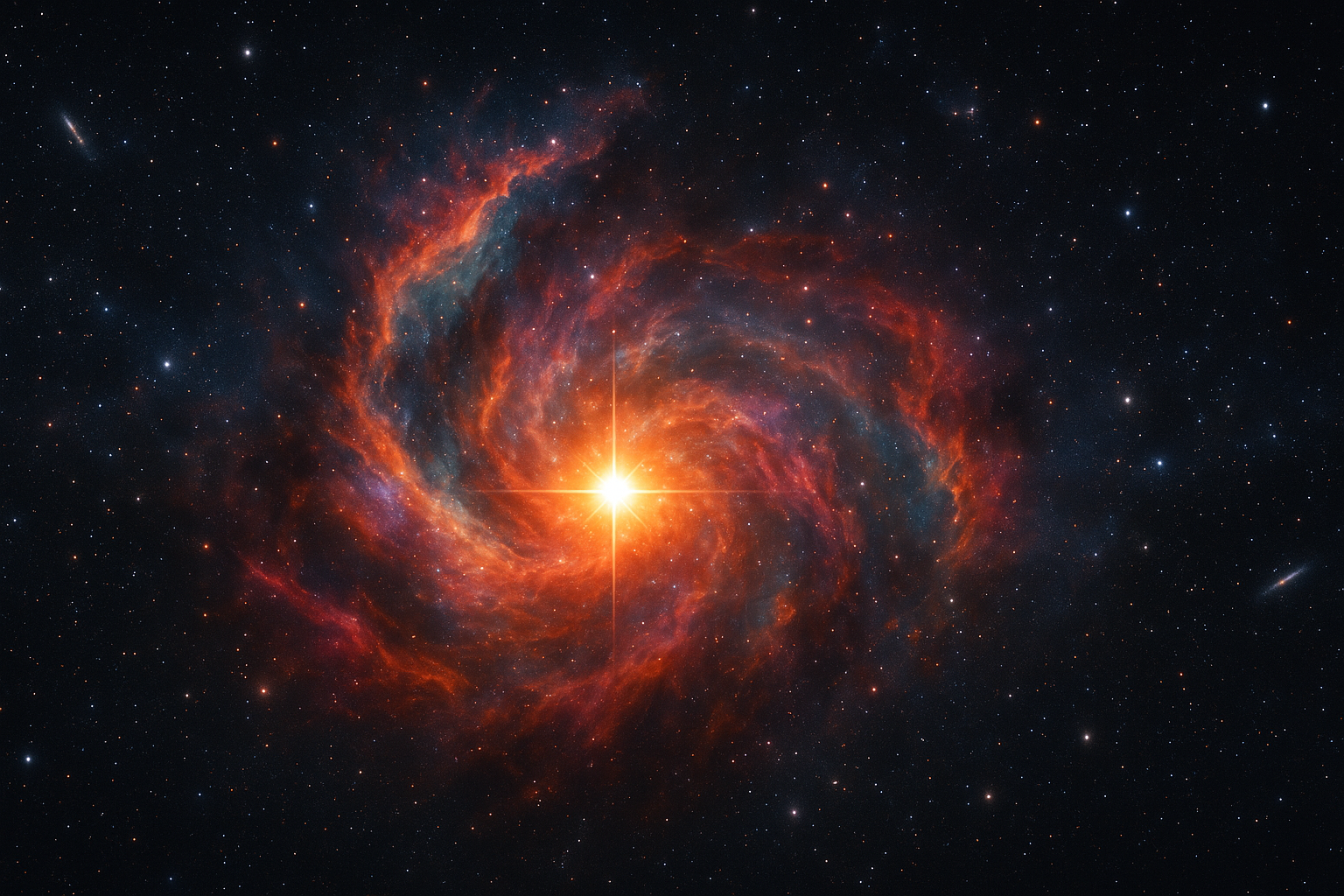
If you've ever gazed into the night sky and wondered about those twinkling jewels of light, you've stumbled upon a great cosmic drama that’s been unfolding for billions of years. Buckle your seatbelts, fellow stargazers, as we embark on a whirlwind tour of a star's life cycle—an interstellar tale worthy of the best soap operas!
It all begins when a cloud of gas and dust—let's call it our star's ‘parenting team’—comes together to form a stellar nursery. Here, the gravitational squeeze makes the stars blush into existence. Just like a chiseler shapes a block of marble into a masterpiece, this cosmic pressure gradually molds hydrogen atoms into heavier elements, setting the stage for our star's radiant debut.
As our star emerges from its cosmic crib, it enters the main sequence phase—this is where the star earns the badge of ‘adulting’! It shines brightly, fusing hydrogen into helium and proving once and for all that stellar adulthood can be quite a sustainable gig—some stars can linger here for billions of years, a bit like that friend who just can’t seem to move out of their parents’ basement.
But alas, no star can escape the clutches of time. Once they exhaust their hydrogen supply, things get complicated. A massive star expands to become a red supergiant, puffing out its proverbial chest, while smaller stars transition into red giants—both strutting around like they own the place.
Now, the climax of every good soap opera is the dramatic finale! For massive stars, this dramatic self-destruction happens in a spectacular supernova explosion—the celestial equivalent of going out in a blaze of glory! If you ever see a bright new star appear that wasn’t there before, be sure to raise your glass—it’s likely the remnants of a supernova celebration! These catastrophic explosions distribute heavy elements throughout the universe, giving rise to new stars, planets, and yes—us!
So next time you catch a glimpse of the Milky Way or send a wish upon a shooting star, remember the saga that brought those lights to your sky. And as June 2026 rolls in, consider this—each twinkle you see is a reminder of the stellar journey, from stardust beginnings to the brilliant supernova endings, forever connecting us in the grand tapestry of the universe!
It all begins when a cloud of gas and dust—let's call it our star's ‘parenting team’—comes together to form a stellar nursery. Here, the gravitational squeeze makes the stars blush into existence. Just like a chiseler shapes a block of marble into a masterpiece, this cosmic pressure gradually molds hydrogen atoms into heavier elements, setting the stage for our star's radiant debut.
As our star emerges from its cosmic crib, it enters the main sequence phase—this is where the star earns the badge of ‘adulting’! It shines brightly, fusing hydrogen into helium and proving once and for all that stellar adulthood can be quite a sustainable gig—some stars can linger here for billions of years, a bit like that friend who just can’t seem to move out of their parents’ basement.
But alas, no star can escape the clutches of time. Once they exhaust their hydrogen supply, things get complicated. A massive star expands to become a red supergiant, puffing out its proverbial chest, while smaller stars transition into red giants—both strutting around like they own the place.
Now, the climax of every good soap opera is the dramatic finale! For massive stars, this dramatic self-destruction happens in a spectacular supernova explosion—the celestial equivalent of going out in a blaze of glory! If you ever see a bright new star appear that wasn’t there before, be sure to raise your glass—it’s likely the remnants of a supernova celebration! These catastrophic explosions distribute heavy elements throughout the universe, giving rise to new stars, planets, and yes—us!
So next time you catch a glimpse of the Milky Way or send a wish upon a shooting star, remember the saga that brought those lights to your sky. And as June 2026 rolls in, consider this—each twinkle you see is a reminder of the stellar journey, from stardust beginnings to the brilliant supernova endings, forever connecting us in the grand tapestry of the universe!