Cosmic Dance-Off: When Stars and Planets Get Groovy
Astrophotography & Observational
Space Exploration
Loading image...
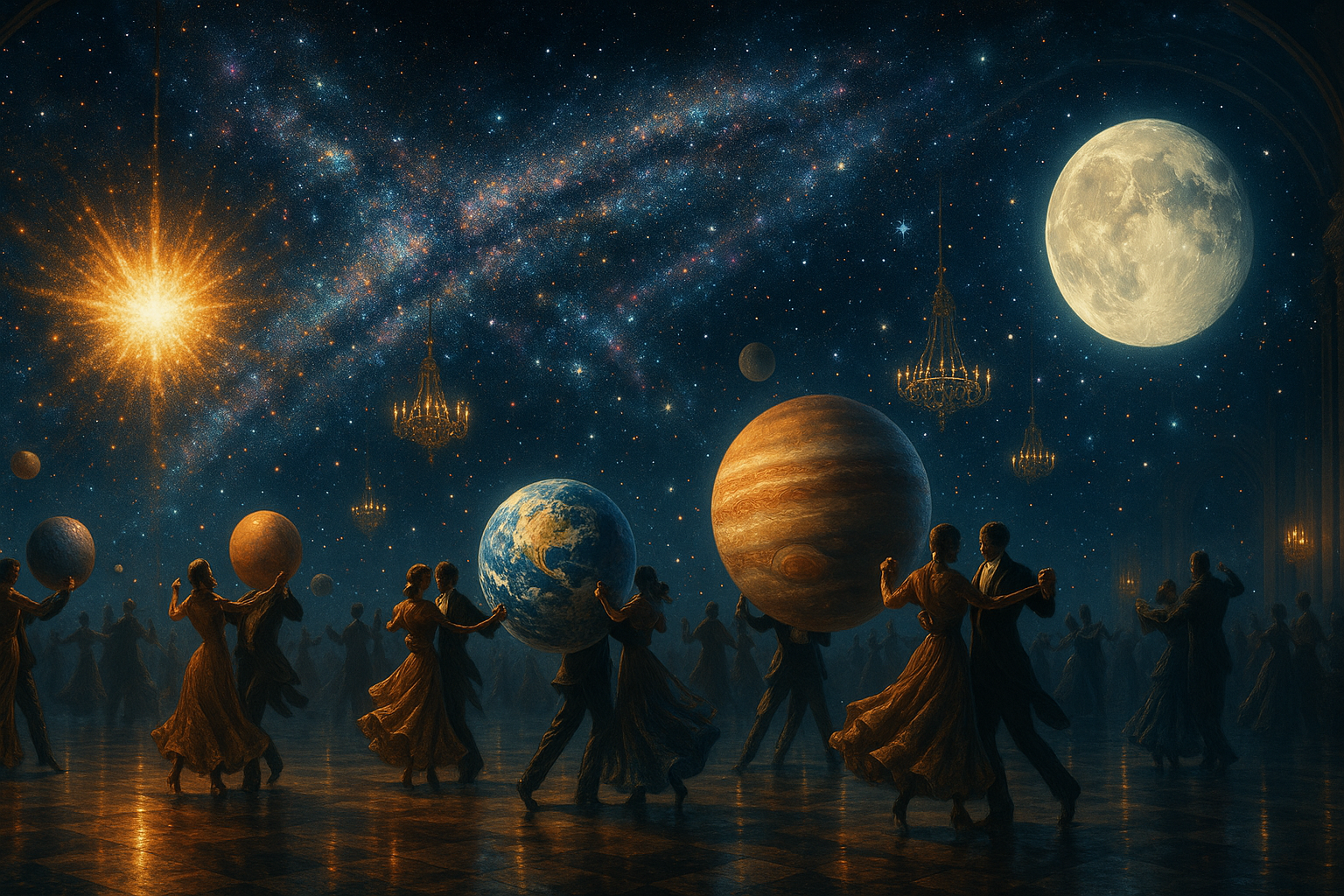
Gather 'round, space enthusiasts! As November 2025 rolls in, we find ourselves in a universe bustling with celestial choreography. Yes, folks, it’s that time again—where stars and planets don their best dance shoes and groove through the cosmos like the solar system’s party animals! Picture this: a vast ballroom, the Milky Way, adorned with twinkling lights and planets really getting into the rhythm.
But what exactly does this cosmic dance entail? Well, let’s start with the planets, those magnificent spheres that spin and twirl around our sun like they’re following an extraterrestrial DJ’s beats. They have their own dance styles too! Mercury, the speedy one, zips around the sun in just 88 Earth days, while the giant ball of gas, Jupiter, takes its sweet time, completing a single revolution in nearly 12 Earth years. Talk about a slow waltz!
Meanwhile, the stars are the real showstoppers. Some stars twinkle and pulsate, while others are just too cool for school, shining steadily in their cosmic gowns. Have you ever watched a supernova explode? It’s like a cosmic fireworks display, leaving behind beautiful nebulae that look like wispy, colorful cloths fluttering in a breeze. Trust me, you won't want to miss that annual dance-off event!
And we mustn't forget the moon, which elegantly pirouettes around our Earth, showing off its phases like the finest phases of a dance routine. From waxing crescent to a full moon, the moon's transformations keep us on our toes and ready for the next cosmic gala.
As we look towards the night sky this November, remember that every time a new star is born or a planet shifts in its orbit, it's just the universe showing off its best dance moves. So grab your telescope, settle in under a blanket, and witness this mesmerizing performance of cosmic proportions. Who knows? You might even spot a dwarf planet or two trying to steal the limelight.
In conclusion, whether you’re taking a casual stroll through the Milky Way or preparing for a front-row seat at a celestial concert, let’s celebrate the splendid spectacle that is our universe. After all, the cosmic dance is just getting started!
But what exactly does this cosmic dance entail? Well, let’s start with the planets, those magnificent spheres that spin and twirl around our sun like they’re following an extraterrestrial DJ’s beats. They have their own dance styles too! Mercury, the speedy one, zips around the sun in just 88 Earth days, while the giant ball of gas, Jupiter, takes its sweet time, completing a single revolution in nearly 12 Earth years. Talk about a slow waltz!
Meanwhile, the stars are the real showstoppers. Some stars twinkle and pulsate, while others are just too cool for school, shining steadily in their cosmic gowns. Have you ever watched a supernova explode? It’s like a cosmic fireworks display, leaving behind beautiful nebulae that look like wispy, colorful cloths fluttering in a breeze. Trust me, you won't want to miss that annual dance-off event!
And we mustn't forget the moon, which elegantly pirouettes around our Earth, showing off its phases like the finest phases of a dance routine. From waxing crescent to a full moon, the moon's transformations keep us on our toes and ready for the next cosmic gala.
As we look towards the night sky this November, remember that every time a new star is born or a planet shifts in its orbit, it's just the universe showing off its best dance moves. So grab your telescope, settle in under a blanket, and witness this mesmerizing performance of cosmic proportions. Who knows? You might even spot a dwarf planet or two trying to steal the limelight.
In conclusion, whether you’re taking a casual stroll through the Milky Way or preparing for a front-row seat at a celestial concert, let’s celebrate the splendid spectacle that is our universe. After all, the cosmic dance is just getting started!