Cosmic Cook-Off: How Stars Are Born in the Universe's Kitchen
Astronomy & Astrophysics
Cosmology & Universe
Loading image...
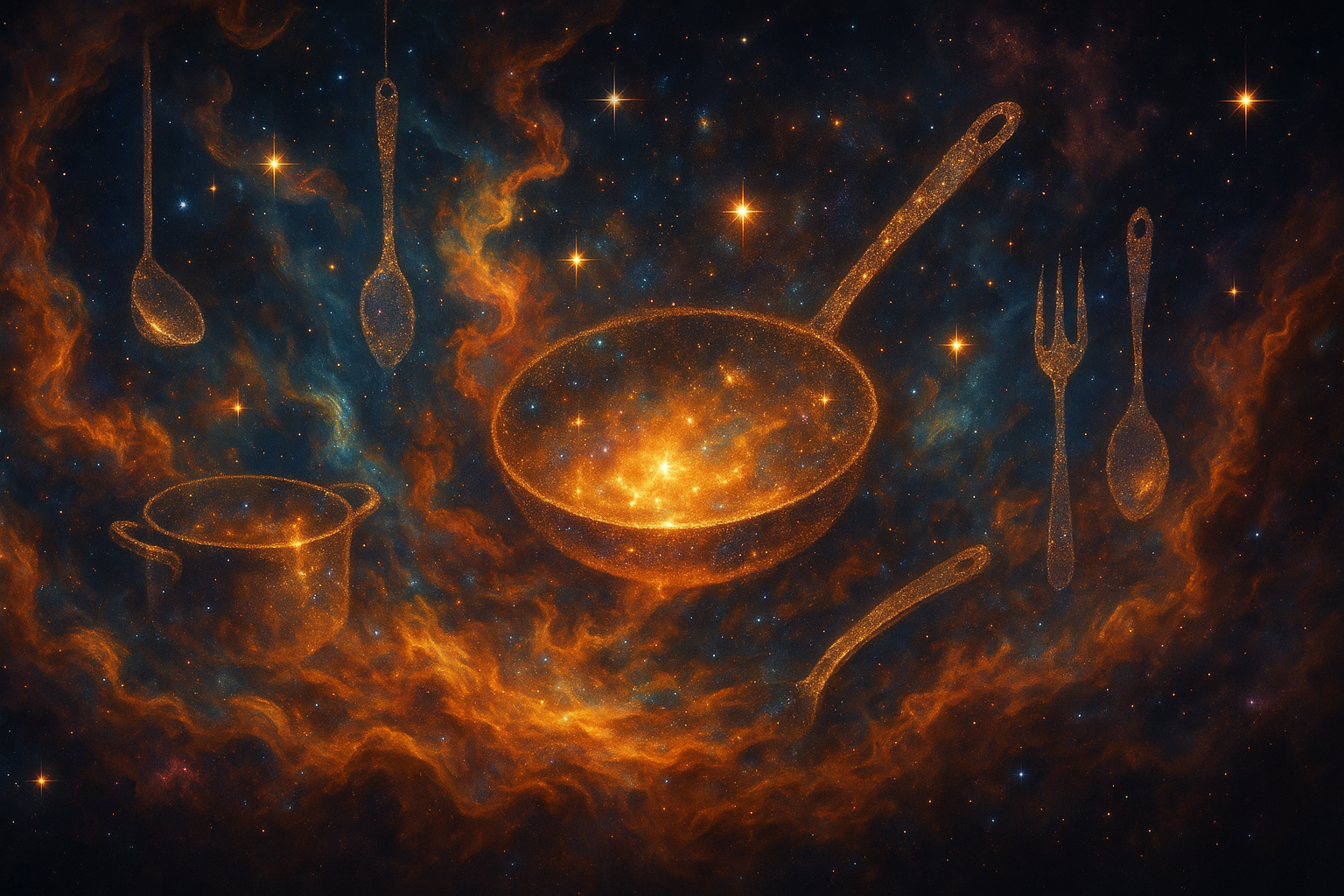
Welcome to the cosmic kitchen, where the universe is whipping up stars faster than you can say 'supernova!' As we wrap up 2025, let's take a delightful dive into how these celestial bodies create and spice up our night sky. Think of stars as the universe's gourmet dishes, crafted through a recipe that combines hydrogen, helium, and a dash of gravity.
In the core of a nebula, the perfect conditions brew a stellar stew. Here, intricate molecular clouds—akin to well-stocked pantries—hold the essential ingredients that lead to star formation. The process begins when regions of a nebula collapse under their own gravity, like folding in the edges of a pastry dough to create a flaky crust. As the material compresses, temperatures soar, igniting fusion like the first flicker of a kitchen flame. Voila! A brand new star is born.
But these stars aren’t just twinkling lights; they come with varying recipes. Some are robust giants ready to dazzle us with their fiery glow while others are petite, shining softly like candle-lit dinners. And just like a skilled chef, the universe has its specialties. Larger stars evolve quickly, burning through their fuel and exploding as spectacular supernovae, scattering ingredients across the cosmos—creating more nebulae and, ultimately, more stars!
As we stargaze this December, think of the constellations as a menu filled with these delightful cosmic dishes. You might even spot Sagittarius or Orion, each a different serving on this galactic menu. While the holidays may tempt us with earthly goodies, remember that the most dazzling and explosive flavors come from the universe’s kitchen. Let’s savor the knowledge that each twinkling star carries a bit of its cooking history—infusing our nights with ancient, fiery tales. So, as you warm up by the fire this season, don’t forget to gaze at the stars and give thanks to the universe for serving up such a magnificent banquet!
So grab your binoculars and ready your palates—this cosmic cook-off never goes out of style!
In the core of a nebula, the perfect conditions brew a stellar stew. Here, intricate molecular clouds—akin to well-stocked pantries—hold the essential ingredients that lead to star formation. The process begins when regions of a nebula collapse under their own gravity, like folding in the edges of a pastry dough to create a flaky crust. As the material compresses, temperatures soar, igniting fusion like the first flicker of a kitchen flame. Voila! A brand new star is born.
But these stars aren’t just twinkling lights; they come with varying recipes. Some are robust giants ready to dazzle us with their fiery glow while others are petite, shining softly like candle-lit dinners. And just like a skilled chef, the universe has its specialties. Larger stars evolve quickly, burning through their fuel and exploding as spectacular supernovae, scattering ingredients across the cosmos—creating more nebulae and, ultimately, more stars!
As we stargaze this December, think of the constellations as a menu filled with these delightful cosmic dishes. You might even spot Sagittarius or Orion, each a different serving on this galactic menu. While the holidays may tempt us with earthly goodies, remember that the most dazzling and explosive flavors come from the universe’s kitchen. Let’s savor the knowledge that each twinkling star carries a bit of its cooking history—infusing our nights with ancient, fiery tales. So, as you warm up by the fire this season, don’t forget to gaze at the stars and give thanks to the universe for serving up such a magnificent banquet!
So grab your binoculars and ready your palates—this cosmic cook-off never goes out of style!