Celestial Cartography: Mapping the Cosmic Neighborhood
Space Exploration
Astrophotography & Observational
Loading image...
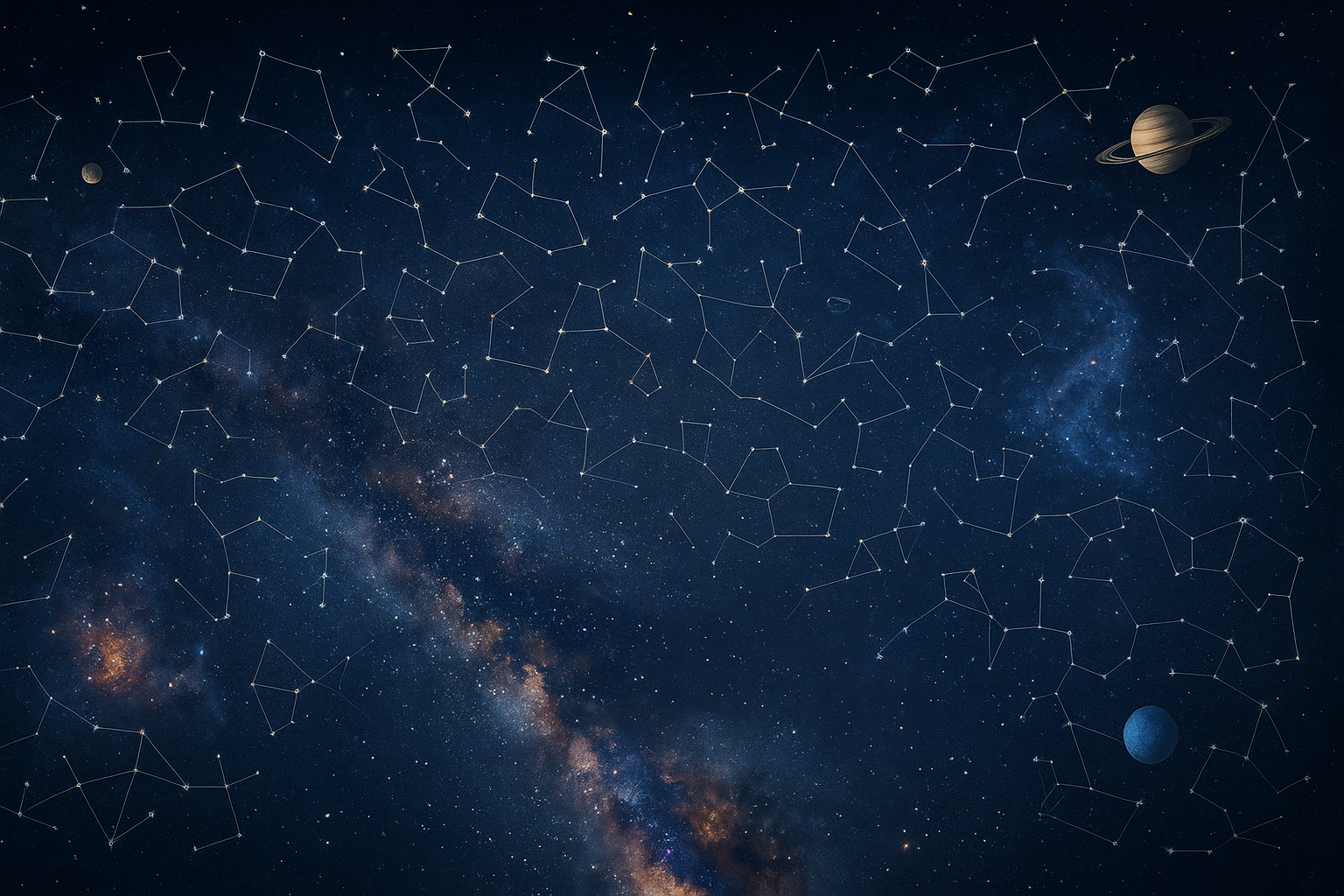
Have you ever thought about how astronomers map the night sky? It’s like using a cosmic Google Maps, except instead of dodging traffic on the 405, you’re dodging black holes and supernova remnants! In January 2026, as we settle into the new year, the attention of skywatchers and scientists alike turns inward to our celestial neighborhood—specifically, our own Milky Way Galaxy.
Imagine the Milky Way as a grand cosmic orchard. Each star is like a unique apple, some bright and shining like a Fuji apple in the sun, while others are darker, perhaps a little wrinkled, like that forgotten apple in the back of your fridge. So how do we pick out our favorite apples from this vast field? Through the wonders of celestial cartography, of course!
Throughout history, different cultures have etched their own interpretations onto the celestial sphere. The ancient Greeks linked constellations with their myths—like Orion, the hunter, and Cassiopeia, the vain queen. Fast forward to today, and we still use these stories to help us navigate our way through the cosmic chaos. But with modern technology, we can do far more than simply connect dots; we have telescopes whirring through the void, mapping stars, planets, and even the lurking dark matter—like cosmic detectives piecing together a stellar whodunit.
In this blog post, we’ll explore the fascinating techniques astronomers utilize in this 'mapping,' ranging from radio waves to infrared observations, all while sharing some of the latest scientific discoveries about our imagined neighborhood. From stellar nurseries, where new stars are born, to supermassive black holes that could be lurking in the center of our galaxy, there’s a lot to uncover. Who knows? Maybe you’ll find a new star to wish upon before you go to bed!
We’ll also touch on the renewed enthusiasm around the search for exoplanets, with missions like NASA's TESS revolutionizing our understanding of worlds beyond our own. As we interact with the universe from our observatories on Earth to deep-space missions, we’re redefining what it means to be part of our cosmic orchard. So, grab your telescopes and let’s map the skies together this January. It’s a delightful time to be an armchair astronomer, so come along as we chart our findings in this cosmic adventure!
Imagine the Milky Way as a grand cosmic orchard. Each star is like a unique apple, some bright and shining like a Fuji apple in the sun, while others are darker, perhaps a little wrinkled, like that forgotten apple in the back of your fridge. So how do we pick out our favorite apples from this vast field? Through the wonders of celestial cartography, of course!
Throughout history, different cultures have etched their own interpretations onto the celestial sphere. The ancient Greeks linked constellations with their myths—like Orion, the hunter, and Cassiopeia, the vain queen. Fast forward to today, and we still use these stories to help us navigate our way through the cosmic chaos. But with modern technology, we can do far more than simply connect dots; we have telescopes whirring through the void, mapping stars, planets, and even the lurking dark matter—like cosmic detectives piecing together a stellar whodunit.
In this blog post, we’ll explore the fascinating techniques astronomers utilize in this 'mapping,' ranging from radio waves to infrared observations, all while sharing some of the latest scientific discoveries about our imagined neighborhood. From stellar nurseries, where new stars are born, to supermassive black holes that could be lurking in the center of our galaxy, there’s a lot to uncover. Who knows? Maybe you’ll find a new star to wish upon before you go to bed!
We’ll also touch on the renewed enthusiasm around the search for exoplanets, with missions like NASA's TESS revolutionizing our understanding of worlds beyond our own. As we interact with the universe from our observatories on Earth to deep-space missions, we’re redefining what it means to be part of our cosmic orchard. So, grab your telescopes and let’s map the skies together this January. It’s a delightful time to be an armchair astronomer, so come along as we chart our findings in this cosmic adventure!