A Cosmic Mismatch: When Galaxies Go Bad
Astronomy & Astrophysics
Loading image...
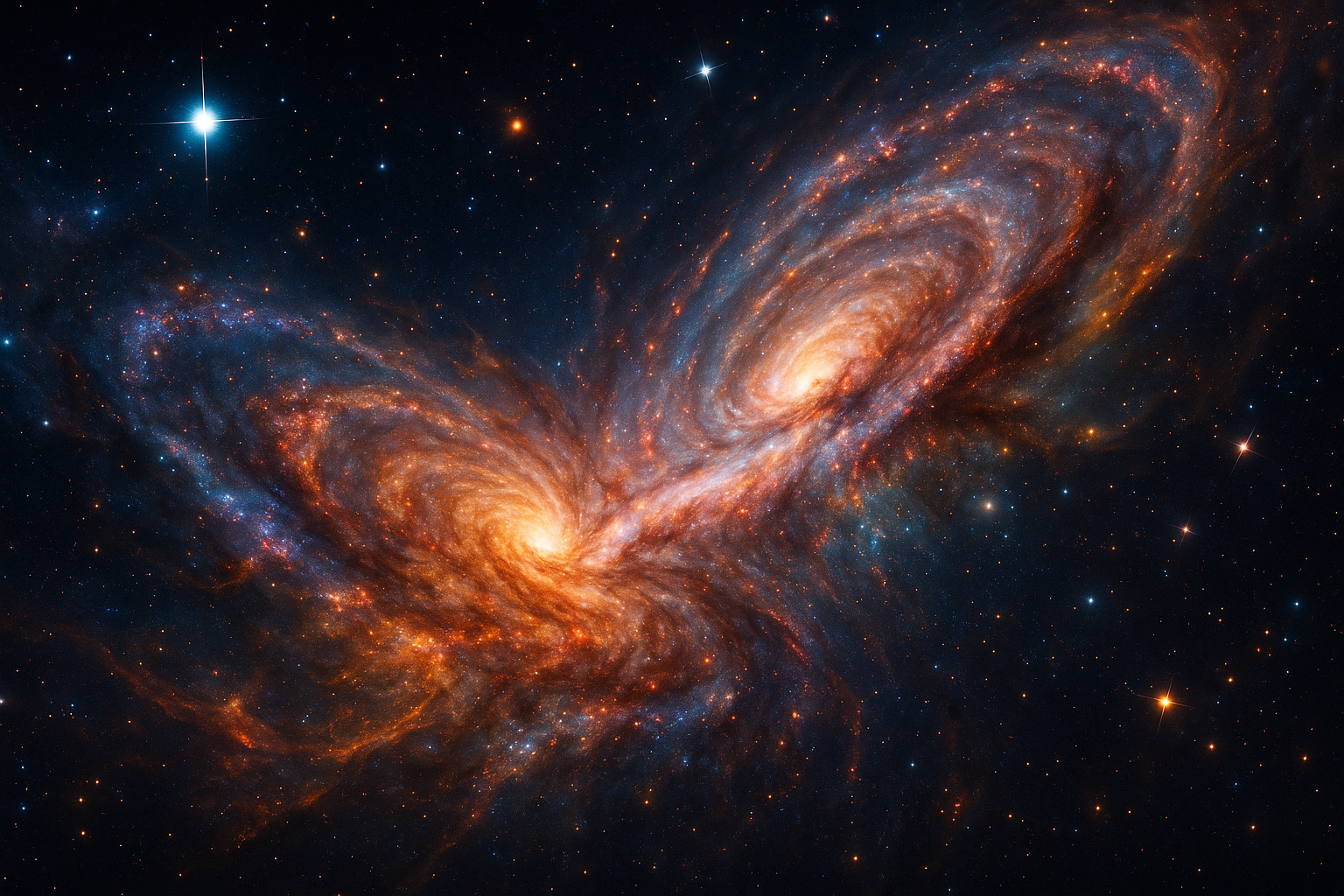
Imagine you’re at a cosmic dance party. The stars are shining, the galaxies are swirling, and everything seems to be in perfect harmony. But suddenly, you spot two galaxies that just can’t seem to dance together—they’re stepping on each other's toes, messing up the rhythm of the universe! Welcome to the curious world of galactic interactions, where the universe plays matchmaker and sometimes ends up setting up the most awkward pairs imaginable.
In February 2026, let's take a closer look at these galactic flops! It turns out, not all galaxies find their cosmic soulmates. Some, like the famous Andromeda and Milky Way, are destined for a beautiful merger, while others could end up in an elaborate galactic soap opera of drama and chaos. When galaxies collide, they don’t just bump and revert back to their original forms; oh no! Instead, they often embark on a wild transformation, reshaping their structures, giving birth to new stars, and sometimes even experiencing a stellar catastrophe!
Just think about it: if galaxies were humans, we’d have our dalliance with some charming yet chaotic partners. One moment, they’re pulling you in with their dazzling brightness (yes, I'm looking at you, the Magellanic Clouds), and the next, they’re here to spoil the party, sucking all the fun out of the atmosphere—like a black hole putting a damper on your space soirée.
Galactic interactions also reveal the mysterious nature of dark matter. It’s like when you find out your partner is secretly hoarding a ton of snacks in their room that you had no idea about. This hidden matter can trigger gravitational effects during galactic collisions, bending light and altering our perception of these starry bodies. It’s a wild game of hide and seek in the cosmos!
This month, keep your eyes peeled to the skies. Who knows, you might just catch a glimpse of galaxies in action, transforming under the influence of their chaotic partners. In the end, whether it results in a stellar mess or a harmonious union, it's all part of the cosmic ballet that keeps our universe ever so spectacular. So next time you gaze up at the night sky, remember that it's not just a collection of twinkling lights; it's a continuous narrative of interactions, relationships, and maybe just a tad of clumsiness. Dance on, proud galaxies!
In February 2026, let's take a closer look at these galactic flops! It turns out, not all galaxies find their cosmic soulmates. Some, like the famous Andromeda and Milky Way, are destined for a beautiful merger, while others could end up in an elaborate galactic soap opera of drama and chaos. When galaxies collide, they don’t just bump and revert back to their original forms; oh no! Instead, they often embark on a wild transformation, reshaping their structures, giving birth to new stars, and sometimes even experiencing a stellar catastrophe!
Just think about it: if galaxies were humans, we’d have our dalliance with some charming yet chaotic partners. One moment, they’re pulling you in with their dazzling brightness (yes, I'm looking at you, the Magellanic Clouds), and the next, they’re here to spoil the party, sucking all the fun out of the atmosphere—like a black hole putting a damper on your space soirée.
Galactic interactions also reveal the mysterious nature of dark matter. It’s like when you find out your partner is secretly hoarding a ton of snacks in their room that you had no idea about. This hidden matter can trigger gravitational effects during galactic collisions, bending light and altering our perception of these starry bodies. It’s a wild game of hide and seek in the cosmos!
This month, keep your eyes peeled to the skies. Who knows, you might just catch a glimpse of galaxies in action, transforming under the influence of their chaotic partners. In the end, whether it results in a stellar mess or a harmonious union, it's all part of the cosmic ballet that keeps our universe ever so spectacular. So next time you gaze up at the night sky, remember that it's not just a collection of twinkling lights; it's a continuous narrative of interactions, relationships, and maybe just a tad of clumsiness. Dance on, proud galaxies!