Stellar Speed Dating: How Stars Choose Their Cosmic Partners
Astrology & Mythology
Astronomy & Astrophysics
Loading image...
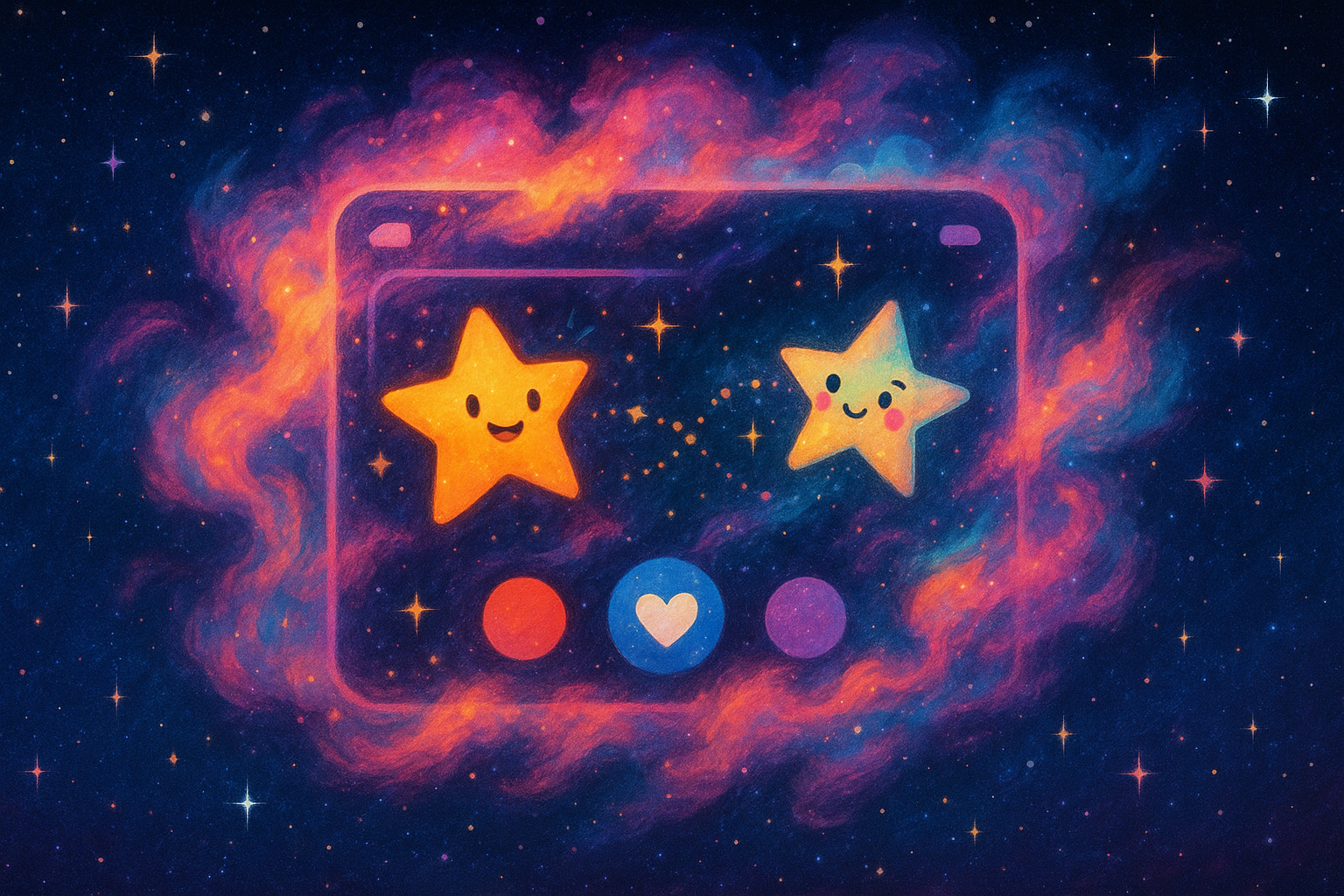
Imagine if stars had Tinder profiles, swiping left and right across the cosmic expanse of the universe! In September 2026, as we gaze at the night sky with excitement, let’s ponder the fascinating world of star formation and interactions. Stars don’t just randomly form; they often find companionship in cosmic clouds, where the gravitational pull plays matchmaker like the best dating app algorithms.
Just like humans, stars have preferences. Some like to hang out in clusters—think of it as their social circles—where they can bask in the warm glow of their stellar buddies. Others prefer solo lives, shining alone in the vast darkness. But when they do come together, things can get dramatic! Take binary stars, for example: it’s the celestial version of being that cute couple at the party, always dancing together under the disco ball of the Milky Way.
The process of star formation begins in nebulae, immense clouds of gas and dust. Picture this cosmic nursery as the ultimate meetup spot, where stars are born from swirling materials, like an artist shaping clay into beautiful sculptures. As these new stars evolve, they might engage in gravitational dance-offs—an exhibition of speed and flair—before settling into their long-term orbits around each other.
Now, let’s spice things up! Sometimes, one star in a binary pair decides to go rogue, stealing gas from its companion—the celestial equivalent of a drama-filled breakup. There are even ‘runaway stars’ that bolt from their clusters, breaking free from their social circles to explore the cosmos solo. These stars just want a little adventure, and who can blame them?
As we enjoy the galactic beauty above this month, let’s take a moment to appreciate the interconnectedness of stars and the universal relationships that define their existence. Just as we seek companionship and connection, every twinkling light in the sky has its own story of love, rivalry, and cosmic alchemy. So next time you catch a glimpse of a shooting star, think about it as a moment of celestial speed dating—skyward fireworks marking a new star's journey as it navigates the vast, vibrant universe we all call home!
Just like humans, stars have preferences. Some like to hang out in clusters—think of it as their social circles—where they can bask in the warm glow of their stellar buddies. Others prefer solo lives, shining alone in the vast darkness. But when they do come together, things can get dramatic! Take binary stars, for example: it’s the celestial version of being that cute couple at the party, always dancing together under the disco ball of the Milky Way.
The process of star formation begins in nebulae, immense clouds of gas and dust. Picture this cosmic nursery as the ultimate meetup spot, where stars are born from swirling materials, like an artist shaping clay into beautiful sculptures. As these new stars evolve, they might engage in gravitational dance-offs—an exhibition of speed and flair—before settling into their long-term orbits around each other.
Now, let’s spice things up! Sometimes, one star in a binary pair decides to go rogue, stealing gas from its companion—the celestial equivalent of a drama-filled breakup. There are even ‘runaway stars’ that bolt from their clusters, breaking free from their social circles to explore the cosmos solo. These stars just want a little adventure, and who can blame them?
As we enjoy the galactic beauty above this month, let’s take a moment to appreciate the interconnectedness of stars and the universal relationships that define their existence. Just as we seek companionship and connection, every twinkling light in the sky has its own story of love, rivalry, and cosmic alchemy. So next time you catch a glimpse of a shooting star, think about it as a moment of celestial speed dating—skyward fireworks marking a new star's journey as it navigates the vast, vibrant universe we all call home!